At the executive level, a CV stops being a record of duties and becomes a record of judgement. A board or hiring committee reading it wants to know the scale you have operated at, the decisions you owned, and what changed on your watch. Formatting a senior CV like a junior one — a long list of responsibilities — buries exactly the signals they are scanning for.
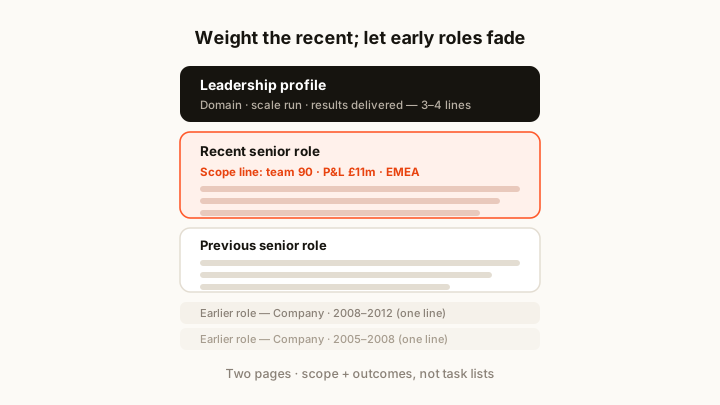
Open with a leadership profile, not an objective
An executive CV earns a short profile at the top: three or four lines that state your domain, the size of what you have run, and the kind of results you deliver. This is the one place to say “P&L of eleven million” or “scaled the team from twenty to ninety” in plain terms. It sets the altitude for everything below and keeps a reader from having to hunt for your seniority.
Compare two openings. “Experienced leader with a track record of success” says nothing — it could describe anyone. “Commercial director who grew a £40m portfolio 3× in four years and rebuilt a 90-person org across three markets” sets scale, domain, and result in one line. The second is what a committee is scanning for.
Structure around scope and results
Below the profile, each role should read as a scope, then a set of outcomes. Say what you were responsible for in one line, then let achievement bullets carry the weight. Reverse-chronological still works, but weight the recent, senior roles heavily and compress the early career into a few lines.
- Scope line: team size, budget, region, or remit, so the reader knows the stage you were playing on.
- Outcome bullets: growth, cost, turnaround, or transformation, each with a number and a timeframe.
- Governance and board work: committees, acquisitions, or restructures you led, which signal readiness for the next tier.
Keep it tight and let early roles fade
Seniority does not license a five-page CV. Two pages is still the target, occasionally three for a long executive career. Detail the last ten to fifteen years, then list earlier positions as title, company, and dates only. What got you started matters far less than what you have delivered recently. The wider layout rules — one clean column, standard headings, room to breathe — still apply at this level; see the CV format and design guide.
Draft the scope and outcome lines with the bullet point writer, then build the layout on an executive template made for this altitude. Sharpen the top section with the resume summary generator, and browse the wider template gallery to find a format that carries authority without decoration.