References are the one CV section a candidate cannot fully control, which is why the format matters. For academic and formal applications where referees are expected up front, a clean, complete, and correctly ordered list signals that you have done the courtesy of asking first.
List referees only when they are expected
In many industry applications, “references available on request” is enough, and printing full details wastes space. Academic, clinical, and public-sector posts are different: they often require named referees with the application. Read the call for applications, and provide exactly what it asks for — no more.
When you do list referees, three is the usual number, chosen to cover different facets of your work: a supervisor, a collaborator, and a senior figure who can speak to your standing.
What each entry should contain
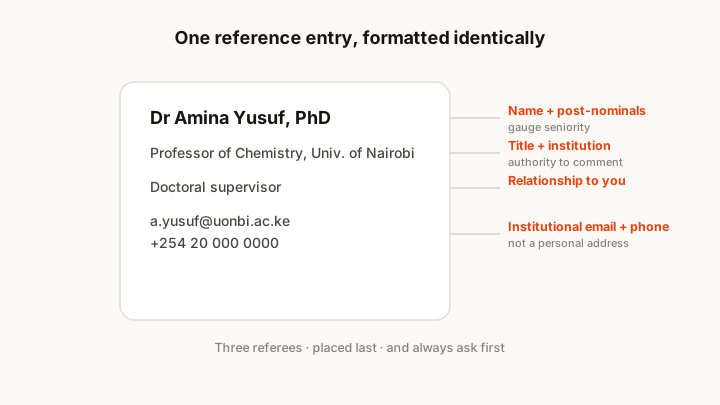
Format every referee identically so the block reads as a set, not a scramble.
- Full name and post-nominals, so the reader can gauge seniority.
- Title and institution, showing the referee’s authority to comment.
- Relationship to you, such as “doctoral supervisor” or “line manager,” in one short line.
- Professional email and phone, using an institutional address rather than a personal one.
Align the entries in a single column, keep the spacing even, and place the section last, after everything a reader will judge you on directly. Because references usually appear on an academic or formal CV, the academic CV guide shows where the section sits relative to publications and service.
The etiquette behind the format
Always ask before you list someone, and give them a copy of the CV and the role so their reference matches your framing. A referee caught off guard by a call is a referee who hesitates. Keep the list current, since an outdated email that bounces reflects on you, not on them. If a role asks for references later rather than up front, hold them back and say so plainly.
A quick pre-submit check
- Did every referee agree, and do they have the CV and job description?
- Are all four fields present and identically formatted across all three?
- Are the addresses institutional and current — no bouncing personal accounts?
- Is the section genuinely required here, or would “on request” serve better?
Once the section is set, run the whole document through the resume checker to confirm nothing is malformed, and build the layout in the CV maker. For where references sit in the overall structure, see how to write a CV.