A clinical research CV is read by people who need to verify competence quickly: principal investigators, sponsors, and regulatory-minded hiring teams. They look for evidence that you have run trials to protocol, handled the data with rigour, and worked inside a compliance framework. Vague statements about “supporting studies” do not survive this reader. Specificity about phase, role, and regulatory standing is what earns the interview.
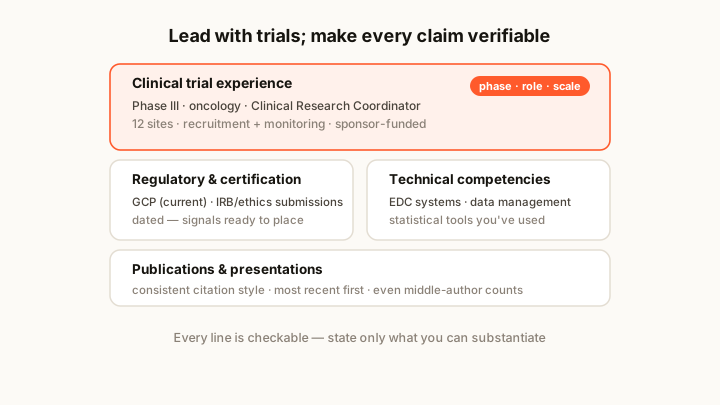
Lead with trial and protocol experience
Give clinical trial experience its own prominent section rather than burying it in job descriptions. For each study, state the phase, the therapeutic area, your specific role, and the scale. A reader wants to know whether you managed sites, monitored data, coordinated recruitment, or authored protocols, and at what volume.
- Trial detail: phase, indication, sponsor type, and your defined role in each.
- Regulatory exposure: GCP, IRB or ethics submissions, and any interaction with regulatory bodies.
- Technical competencies: EDC systems, statistical tools, and data management platforms you have used.
The difference specificity makes: “Supported various oncology studies” tells a PI nothing. “Coordinated a Phase III oncology trial across 12 sites — owned recruitment and data monitoring to protocol” tells them your phase, your scope, and your rigour in one line.
Document compliance and certification plainly
In this field, certifications are not decoration, they are prerequisites. List Good Clinical Practice training, human subjects certification, and any therapeutic or device-specific credentials with dates. A current GCP certificate signals you can be placed on a study without delay, which is a practical hiring consideration.
Include publications and presentations
Clinical research careers often produce authorship on papers, abstracts, and posters. Present these in a dedicated section using a consistent citation style, most recent first — the same conventions covered in listing publications and patents. Even a middle-author position on a peer-reviewed trial publication demonstrates genuine involvement in the research and its dissemination.
Keep it verifiable and precise
Every claim on a research CV can be checked, so state only what you can substantiate. Match the length to your record: comprehensive for an experienced coordinator or investigator, tighter for an entry-level associate. For the wider academic conventions this sits within, see the academic CV guide.
For the underlying framework, our CV guide covers structure, and an ATS-friendly template keeps a detailed CV parseable. Build and check yours with the CV maker and the resume checker.