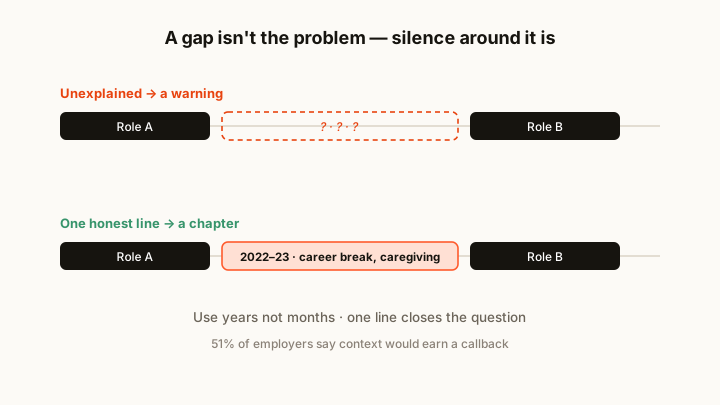
Almost everyone has a gap eventually: a layoff, caregiving, illness, study, a move, a burnout year. Recruiters know this. What makes them nervous is not the gap itself, it is silence around it, because silence invites the worst assumption. Fill it, briefly and honestly, and the gap stops being a story you are hiding.
The market has moved on this, too. In 2022 LinkedIn added a “Career Break” field to profiles precisely because gaps are normal — and its own survey found 51% of employers would be more likely to call back a candidate if they knew the context of the break. Context is the whole game.
Name it, then move on
You do not owe a paragraph. A single dated line on your CV does the job: “2022 to 2023, career break, full-time caregiving” or “2021, sabbatical, completed a data analytics certificate.” One line closes the question so the reader spends their attention on your experience, not on doing arithmetic with your dates.
Show what the time bought
If you did anything remotely relevant during the gap, say so: freelance work, a course, volunteering, open-source, running a household budget like a small business. It reframes the period as active. If you did nothing job-related, that is fine too — rest is a valid reason, and a recovered person is a better hire than a depleted one.
- Use years, not months on the CV, so short gaps disappear.
- One honest line beats a vague, defensive paragraph.
- Save the detail for the interview, where tone carries it.
What not to do
A few moves make a manageable gap worse:
- Faking continuous dates. A background check or a straight question unravels it, and now the problem is honesty, not a gap.
- Over-explaining. A defensive paragraph draws more attention to the gap than a calm one-liner ever would.
- Apologising. Time away is common and often valuable; frame it as a fact, not a confession.
If the break came with a change of direction, treat the two together — the gap line and a reframed history — as covered in how to change careers.
Rehearse the 20-second version
The CV line earns you the interview, then a calm spoken answer seals it. Practise a short, matter-of-fact version out loud so it lands as confidence, not apology — the same rehearse-until-ordinary approach that carries the rest of the interview.
Our guide on tailoring per role shows where to place the line for each job, and interview practice lets you rehearse the spoken version until it feels ordinary. Changing fields entirely? The career-change resume builder is built for it.