A career-change CV loses when it reads as a history of the job you are leaving. It wins when it reads as a case for the job you want. Recruiters are not hiring your last title, they are hiring the outcomes you can repeat in a new context. Your task is to make those outcomes obvious before anyone reaches your old job titles.
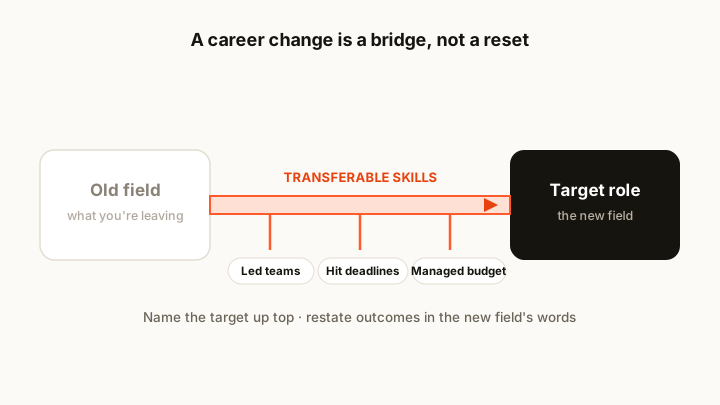
Put a summary and target up top
On a straightforward CV you can skip the summary. On a career-change CV you cannot. Recruiters need one sentence that says who you are becoming, not just what you were. Name the target role, name the two or three strengths that carry over, and let the rest of the page back that claim. Without it, a reader has to guess why a warehouse supervisor is applying to a project coordinator role, and guessing is the fastest route to the reject pile.
A working example: “Operations supervisor moving into project coordination — five years running scheduling, budgets, and cross-team handovers for a 40-person warehouse, now certified in agile project management.” In one line the reader knows the direction, the evidence, and the proof you’re already moving.
Reframe experience as transferable evidence
The work is real, the framing is what changes. Pull the parts of each old role that a hiring manager in the new field would recognise, and cut the jargon that only made sense inside your old industry.
- Transferable outcomes: budgets managed, teams led, deadlines hit, restated in the vocabulary of the new field.
- Adjacent skills: the certificate, course, or side project that shows you are already moving toward the target, not just hoping.
- Motivation as a pattern: a short thread that connects past to future, so the switch reads as a decision, not a panic.
One caution: a resume also has to clear the software screen, and career-changers often lose here by keeping their old industry’s keywords. Mirror the new field’s language so the applicant tracking system reads you as a match, not a stranger.
Bridge the gap honestly
You do not need to hide the pivot. You need to make it make sense. A brief line explaining the move, backed by a course you finished or a project you shipped in the new area, reassures a reader far more than a CV that pretends the old career never happened. Honesty here is a strength, not a confession. If your change also involved time away from work, frame that the same way — briefly and plainly (see how to describe a career gap).
The CV is half the story
A career-change CV shows what transfers; the cover letter explains why you’re moving and turns an apparent mismatch into a deliberate choice — it’s the one situation where a letter genuinely earns its place. And the wider strategy (transferable skills, bridge roles, networking) is worth reading in full: how to change careers.
Start by reframing your history with the resume summary generator, then rebuild the whole thing in the resume builder. The tailor-per-role guide shows how to point one CV at a specific job, and the action verbs post helps your old work read like the new field.