Most people treat the first question as a biography prompt and ramble from birth to now. Interviewers are not asking for your life story, they are watching how you frame one. A tight, deliberate answer tells them you will be clear in meetings, in email, and with clients. A rambling one tells them the opposite before you have said anything about the job.
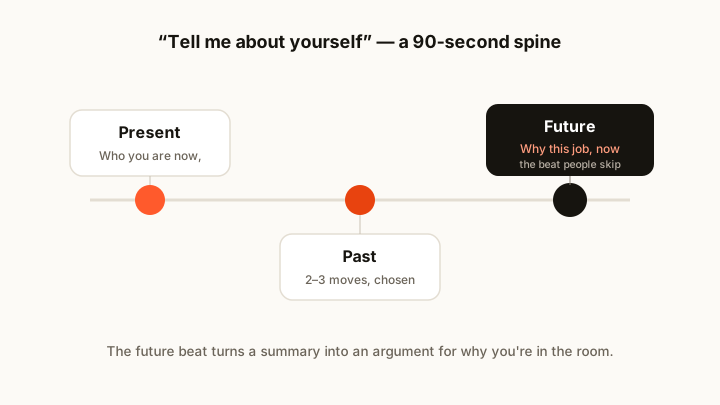
The spine: present, past, future
Give the answer a shape it can stand on. Three beats, ninety seconds total:
- Present: who you are professionally right now, in one line.
- Past: the two or three moves that got you here, chosen for this role.
- Future: why this job, this team, this room, right now.
The future beat is the one people skip, and it is the one that matters most. It turns a summary into an argument for why you are sitting there.
Heard out loud, it sounds like this: “I’m a support lead who’s spent the last three years turning angry tickets into retained customers. I started in retail, moved into SaaS support, and taught myself analytics so I could fix the causes, not just the symptoms. That’s exactly why this customer-success role caught my eye — it’s the next step from firefighting to prevention.” Present, past, future — done in under a minute.
Tailor the past to the job
Your history does not change, but which parts you surface should. Applying to a startup? Lead with the time you did five jobs at once. Applying to a regulated enterprise? Lead with the time you got the process right under audit. Same you, different edit. This is the same “choose the evidence for the target” thinking that carries the rest of the interview — the full interview-prep framework shows how the opening answer sets up every question after it.
What not to do
Three quick failure modes to avoid:
- The life story. Starting with your degree from a decade ago spends your best seconds on your least relevant material.
- The résumé readback. They have your CV; reciting it adds nothing. Interpret, don’t repeat.
- The humble ramble. Trailing off with “…so, yeah, that’s me” undoes a strong answer. End on the future beat, deliberately.
Say it out loud until it is boring
A scripted answer sounds scripted. A rehearsed one sounds natural. The difference is reps, not talent. Run it enough times that the structure is muscle memory and the words stay fresh.
Rehearse the whole loop in interview practice, get the tailoring right first with the tailor-per-role guide, and keep the version you used attached to each application in the tracker.