At senior level your curriculum vitae is read as a statement of standing in the field, not a list of posts held. Panels want funding secured, publications that shaped the literature, and evidence that you lead programmes rather than execute them. The document should surface those signals in the first half of the page.
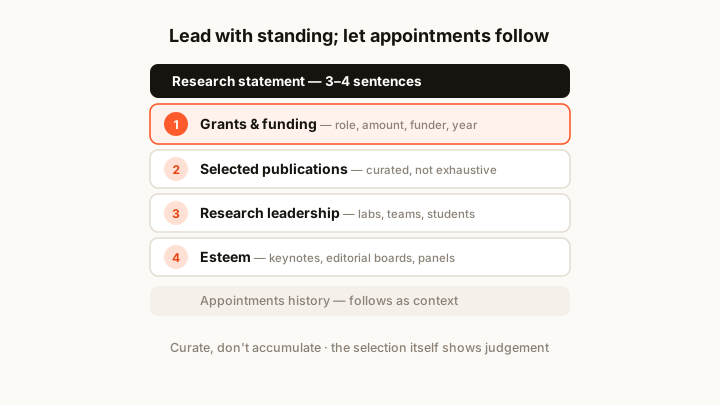
Order by evidence of leadership
The reverse-chronological career list that serves early researchers buries what matters at senior level. Lead instead with the sections that demonstrate influence, then let the appointments history follow as context. (This is the opposite of the standard early-career order shown in the academic CV guide — seniority earns the reshuffle.)
- Grants and funding: state your role, the amount, the funder, and the year; distinguish principal investigator from co-applicant.
- Selected publications: curate rather than exhaust, marking your named contribution and any that are highly cited.
- Research leadership: labs directed, teams built, doctoral students supervised to completion.
- Esteem indicators: keynotes, editorial boards, review panels, and invited fellowships.
Curate, do not accumulate
A twenty-year record tempts completeness, but a forty-page document signals poor judgement. Offer a “Selected Publications” heading and a full list as an appendix or linked profile. The curation itself is a demonstration of taste: choosing the ten outputs that define your programme tells a committee more than a hundred entries that do not.
Make the narrative legible
Group your work under research themes so a reader outside your niche can follow the arc of your contribution. A short research statement at the head, three or four sentences, frames the sections that follow. Keep metrics precise and verifiable: total funding awarded, students graduated, citation counts if you cite them at all.
Compare two lines. “Involved in various funded projects” says nothing. “PI on a £2.4m Wellcome award (2021–25); co-I on two further grants totalling £1.1m” states role, scale, funder, and standing in one breath. The senior CV rewards that precision everywhere.
The single question behind every section
The senior curriculum vitae rewards discipline. Every section should answer a single question the panel is asking: has this person led, funded, and advanced the field, and can they do it again? If a line doesn’t help answer it, cut it.
To shape yours, start with the writing guide, keep the executive-length layout tight with the executive CV format, and settle on structure using an executive template.