Page size is the detail nobody thinks about until a recruiter prints your resume and the last line spills onto a second sheet. A4 and US Letter are close but not equal, and using the wrong one across borders leaves a stray white margin, a clipped footer, or a layout that reflows just enough to look careless. Getting it right costs one setting change.
Know which size each region expects
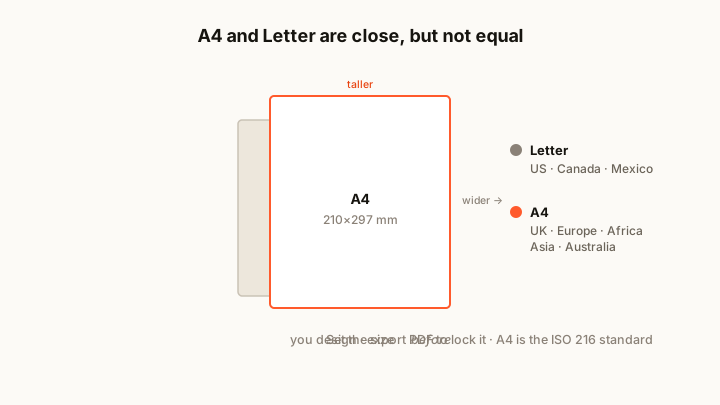
The world splits cleanly. Letter (8.5 by 11 inches) is standard in the United States, Canada, and Mexico. A4 (210 by 297 mm) — the size defined by the international ISO 216 standard — is the norm almost everywhere else: the UK, Europe, Africa, Asia, and Australia. A4 is slightly narrower and taller than Letter, so a document built for one will not fill the other’s page perfectly.
- Applying in the US or Canada: use US Letter.
- Applying anywhere else: use A4.
- Applying to a global or remote role: match the company’s headquarters, and A4 is the safer default when unsure.
Set it before you design, not after
Page size changes the usable width, which changes how your lines wrap. Switching at the end reflows everything and can push a tidy one-pager onto two. Choose the size first, then lay out inside it. If you keep both a Letter and an A4 version, check each one separately, because a bullet that fit on one may break on the other — the master-and-variants habit from managing multiple CV versions keeps this painless.
Export as PDF and lock it in
A PDF freezes your page size so it survives whatever printer or screen it meets. A Word file can silently re-flow to the recipient’s default page setting, undoing your careful layout. Export to PDF, then open it once to confirm nothing shifted.
Paper size is one of a short list of things that localise a cross-border application — alongside date format, phone country code, and terminology. The full set is in the international resume guide.
A tight layout is easier to keep consistent, so a one-page template removes most of the risk. If you draft in Google Docs, the Google Docs templates let you set the page size before you start. For the wider debate on length, see the CV format and design guide.